why he's always alone
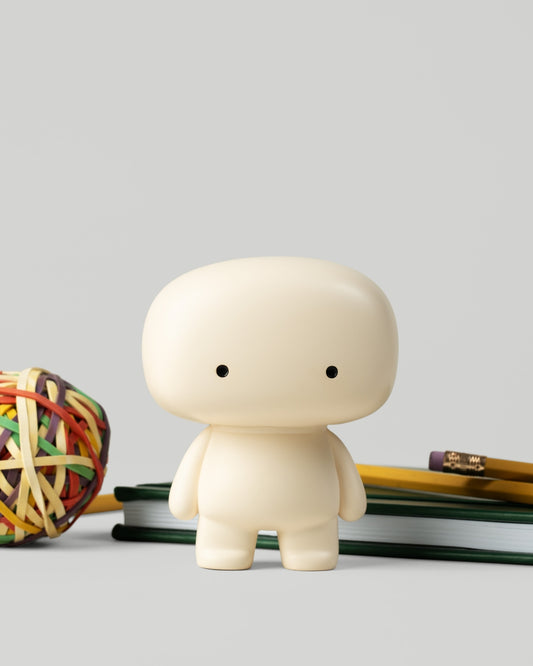
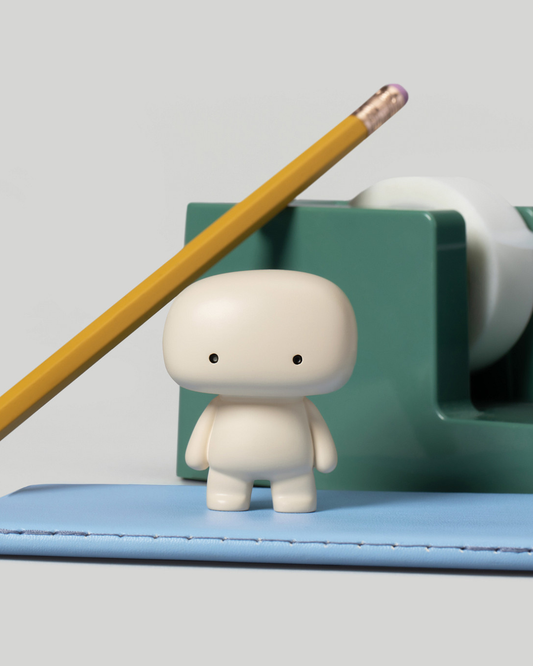
people ask about this one too, once they've noticed the mouth. why is he always by himself. no crowds, no second figure, nothing else in frame — just blumo, in a room that clearly belongs to someone.
a second figure changes the subject

put two characters in a frame and the frame stops being about either of them — it becomes about the space between them. that's a fine thing for most stories. it's just not this one. blumo was never meant to be watched relating to someone else. he was meant to be sitting there while you do the relating.
unaccompanied, not lonely

there's a difference between a room that's missing someone and a room that's simply quiet. blumo isn't waiting for company. he's just where he is — a lobby after closing, a stairwell nobody's using, wherever the light happens to be doing something worth sitting in. the stillness isn't absence. it's just room.
the space stays open

if someone else stood next to him, that space would belong to the two of them. instead it stays open — for whoever's actually looking. that was the arrangement from the start. he holds still, he doesn't explain himself, and the frame stays yours to fill.